Loading product details
Preparing specifications, features and applications…
The BIO-150RHP Pro CO₂ Incubator represents the advanced-specification water-jacketed CO₂ incubator for cell culture laboratories requiring the most comprehensive contamination control available — combining 180°C dry heat sterilization, UV sterilization, and HEPA filtration in a single triple-layer decontamination system, supported by infrared CO₂ sensor control at ±0.1% accuracy and water-jacketed heating at ±0.1°C temperature accuracy. The water jacket design — which surrounds the 60L chamber with a uniform heated water envelope — provides the most thermally stable incubation environment available in CO₂ incubators, making the BIO-150RHP Pro the instrument of choice for long-term cell culture, tissue engineering, and pharmaceutical biological research where absolute temperature stability and complete contamination control are non-negotiable requirements. Enquire about the BIO-150RHP Pro today.
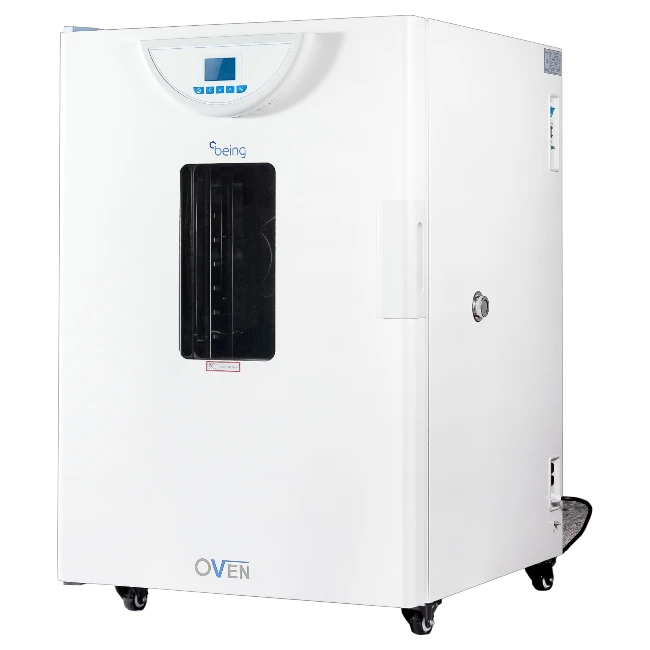
The BIO-150RHP Pro CO₂ Incubator integrates 180°C dry heat sterilization, UV decontamination, HEPA filtration, water-jacketed heating, touch screen control, infrared CO₂ sensor, and CO₂ pressure regulation — delivering the most advanced contamination protection and incubation precision available for cell culture, biotechnology, and pharmaceutical laboratory applications in a 60L format.
The BIO-150RHP Pro is operated via a touch screen intelligent controller — providing an intuitive, programmable interface for all incubation parameters including temperature setpoint, CO₂ concentration, humidity monitoring, timer functions, and sterilization cycle management. The touch screen interface supports precise digital parameter entry, real-time display of actual versus setpoint values for all controlled variables, and the timing function enables automated protocol management — including scheduled sterilization cycle initiation and protocol duration tracking for defined incubation periods. The programmable operation capability supports complex multi-parameter cell culture protocols requiring coordinated control of multiple incubation conditions.
The BIO-150RHP Pro's UV sterilization system provides routine, scheduled UV-C surface decontamination of the chamber interior between working sessions and as a supplementary decontamination measure between full 180°C dry heat sterilization cycles. UV-C radiation at 254 nm effectively inactivates bacteria, viruses, and fungal spores on directly exposed chamber surfaces — providing a rapid, chemical-free decontamination option for daily maintenance without the extended cycle time required for the full 180°C sterilization cycle. UV sterilization complements the 180°C dry heat and HEPA systems to create a comprehensive three-layer contamination control framework.
The BIO-150RHP Pro incorporates a microbiological HEPA filter rated at ≥99.99% efficiency for particles ≥0.3 μm — providing continuous airborne contamination control during normal incubation operation between sterilization cycles. The HEPA filter captures airborne bacteria, fungal spores, and particulate contaminants from the air circulated within the chamber, maintaining a clean air environment around cultures at all times. Combined with the 180°C dry heat sterilization for surface contamination and the UV system for routine maintenance, the HEPA filtration completes the three-layer contamination control system of the BIO-150RHP Pro.
The BIO-150RHP Pro's automatic fan speed control system continuously adjusts the circulation fan speed based on real-time chamber conditions — optimising airflow to maintain CO₂ and temperature uniformity across the chamber volume while minimising airflow disturbance to sensitive cultures. The automatic adjustment responds to changes in chamber loading, door opening events, and temperature or CO₂ recovery phases — modulating fan speed to balance the competing requirements of uniform environmental parameter distribution and gentle air movement that does not mechanically stress delicate cell culture systems.
The BIO-150RHP Pro's CO₂ inlet pressure control system maintains stable CO₂ gas delivery to the chamber regardless of supply line pressure fluctuations — ensuring consistent CO₂ concentration control at ±0.1% accuracy throughout the incubation cycle. In cell culture laboratories where multiple CO₂-consuming instruments share a common supply line, pressure fluctuations from other equipment's demand can cause CO₂ concentration deviations if unregulated — the BIO-150RHP Pro's pressure control system eliminates this source of CO₂ instability.
The BIO-150RHP Pro uses a water jacket heating system — surrounding the 60L chamber with a uniform water envelope that acts as a thermal buffer between the external environment and the chamber interior. Water jacket heating provides significantly more stable temperature uniformity than air-jacketed systems because water's high thermal mass absorbs and releases heat slowly — preventing rapid temperature fluctuations from door openings, sample loading events, and ambient temperature variations from reaching the chamber interior at a rate that would disturb sensitive cultures. ±0.1°C temperature accuracy is maintained throughout the water-jacketed chamber.
The BIO-150RHP Pro's 60L chamber is constructed from polished stainless steel with rounded interior corners — providing a smooth, non-porous surface that resists microbial adhesion and is compatible with the 180°C dry heat sterilization cycle, UV radiation, and standard laboratory disinfectant cleaning procedures. The rounded corner design eliminates the dead zones where biological contaminants can establish in squared-corner chambers, supporting thorough decontamination throughout the 180°C sterilization cycle and during manual cleaning between sterilization runs.
The BIO-150RHP Pro maintains ≥95% relative humidity through natural evaporation from a stainless steel water pan — preventing culture medium evaporation, maintaining osmolality in open-top dishes and low-volume cultures, and supporting the long-term viability of sensitive primary cells and established cell lines during extended culture protocols. The high humidity (≥95%) is essential for maintaining the physicochemical environment of the culture medium within the parameters required for consistent cell growth, and the natural evaporation system achieves this without the condensation risks associated with active humidification systems.
The BIO-150RHP Pro CO₂ Incubator incorporates eight independent safety and monitoring systems — covering thermal protection, sensor integrity, CO₂ monitoring, door status, and sterilization tracking — providing comprehensive protection for sensitive cell culture applications during continuous unattended incubation.
The BIO-150RHP Pro activates audible and visual alarms when chamber temperature deviates beyond the user-configured high or low threshold — alerting operators to thermal deviations that could compromise sensitive cell cultures before irreversible damage occurs. In a water-jacketed incubator, the thermal mass of the water jacket means that temperature deviations develop more slowly than in air-jacketed systems — but the high and low temperature alarms ensure that any deviation beyond the acceptable range is detected and communicated promptly.
The BIO-150RHP Pro incorporates an independent temperature limiter that cuts heating power automatically if chamber temperature exceeds the safe upper limit — operating entirely independently of the primary water jacket temperature control system. This independent protection circuit is critical for a water-jacketed incubator: the water jacket's thermal mass means that once over-temperature conditions develop, they are slow to self-correct and can cause sustained thermal stress to cultures without a rapid-response independent protection circuit.
The BIO-150RHP Pro continuously monitors the operational status of both the door temperature sensor and the chamber temperature sensor — activating dedicated failure alarms if either sensor malfunctions or returns an out-of-range signal. Sensor failure alarms are critical for a water-jacketed CO₂ incubator running long-duration cell culture protocols: undetected sensor failure could allow silent temperature or CO₂ deviations to persist for hours before the next scheduled operator check, by which time irreversible culture damage may have occurred.
The BIO-150RHP Pro features a dedicated CO₂ condensation alarm that detects conditions conducive to CO₂ condensation within the incubation chamber — a phenomenon that can affect CO₂ sensor accuracy and chamber environment stability if undetected. The condensation alarm alerts operators to humidity or temperature conditions that may be causing CO₂ absorption into condensate, enabling corrective action before CO₂ concentration measurements are compromised by condensation interference with the infrared sensor.
The independent temperature limiter in the BIO-150RHP Pro functions as a dedicated secondary protection circuit with its own alarm output — providing both protective action (cutting heating power) and operator notification when the chamber temperature reaches the limiter threshold. The independent limiter alarm is distinct from the primary high temperature alarm — it represents the final protection layer before potential heating element damage or culture loss from uncontrolled heating, providing a clear indication to operators of a serious thermal event requiring immediate attention.
The BIO-150RHP Pro's door open alarm activates when the incubator door remains open beyond the configured time threshold — alerting operators to prolonged door exposure that disrupts CO₂ concentration, temperature, and humidity simultaneously. In a water-jacketed incubator, the thermal mass of the water jacket moderates temperature loss from door opening — but CO₂ and humidity recovery still require ≤3 minutes and ≤8 minutes respectively after door closure, making door open duration monitoring an important protocol adherence tool.
The BIO-150RHP Pro tracks the elapsed time since the last sterilization cycle and provides a reminder alert when the next 180°C dry heat sterilization cycle is due — ensuring that the comprehensive contamination control system is maintained on schedule. In cell culture laboratories where contamination events can cause significant research disruption and material loss, consistent adherence to the 180°C sterilization schedule is critical — the automated reminder removes reliance on manual record-keeping in high-activity laboratory environments.
Explore alternative models and related solutions from other categories