Loading product details
Preparing specifications, features and applications…
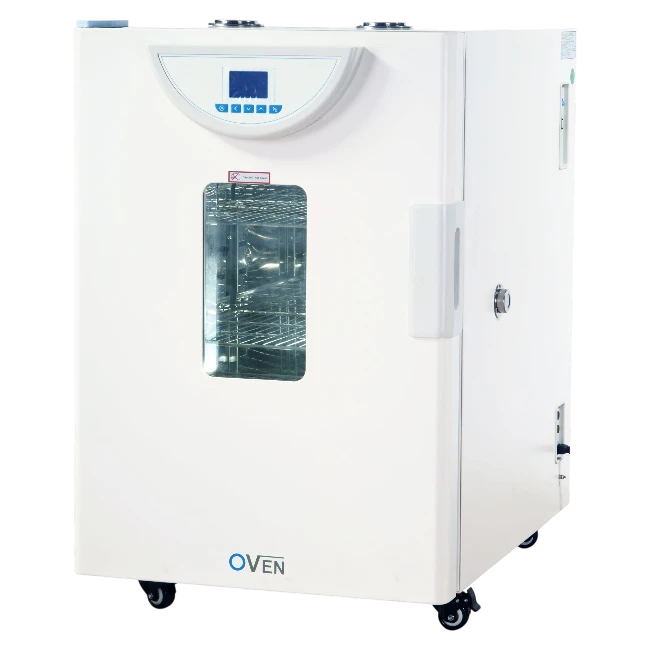
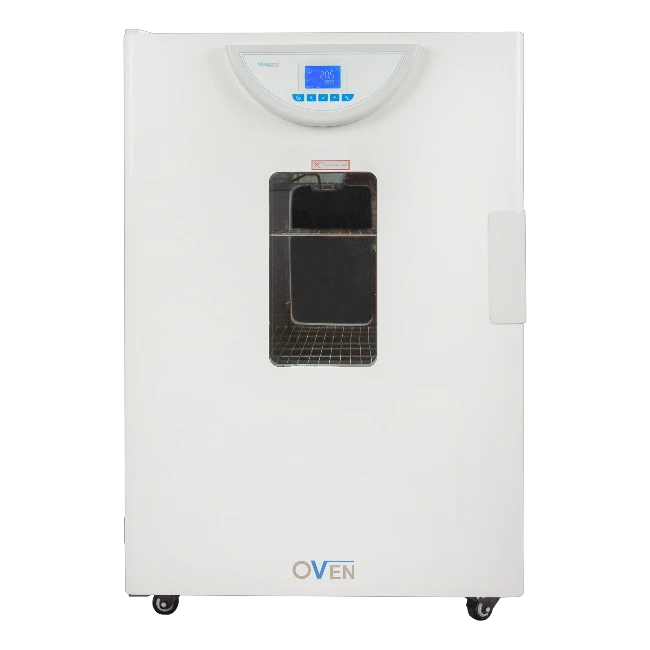
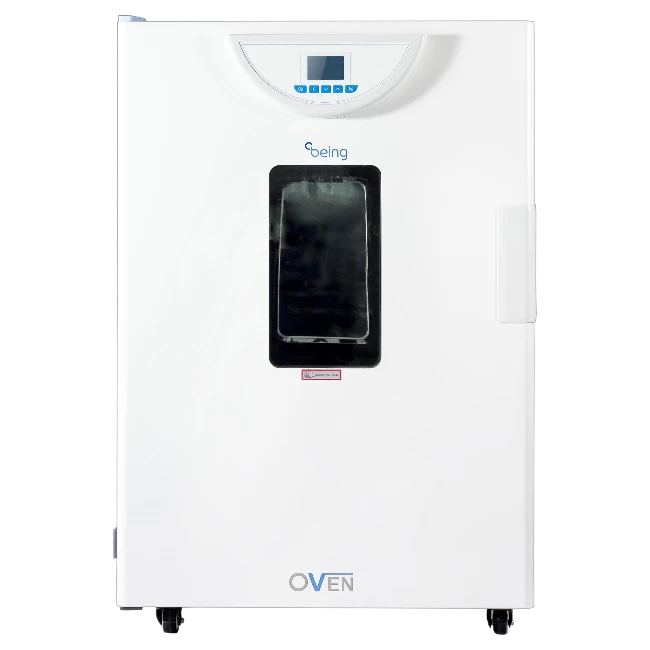
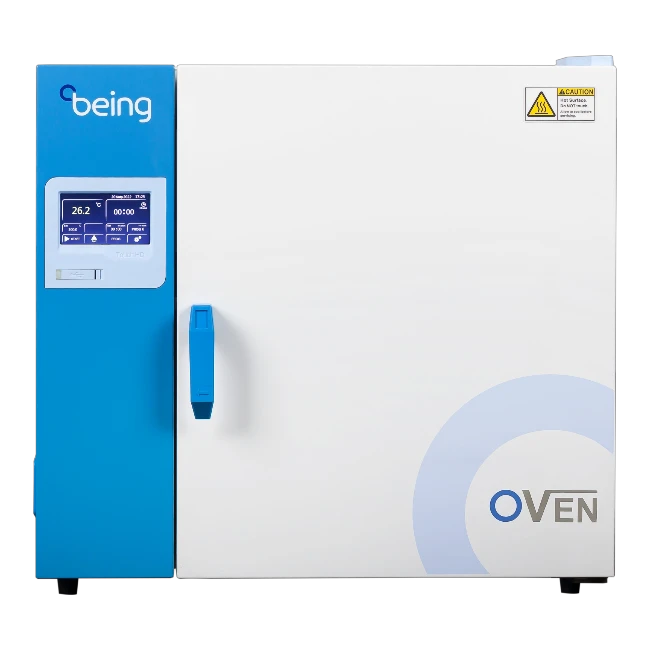
The BO-30F Precision Forced Air Oven is the compact entry model of the BO Series — delivering professional-grade temperature precision, programmable multi-stage control, and comprehensive safety protection in a 30L, 900W benchtop format suitable for routine laboratory drying, sample preparation, glassware sterilisation, and material testing. With a color touch screen controller supporting multi-stage programmable temperature, time, and airflow control, ±0.3°C temperature fluctuation, ±2.0°C uniformity at 100°C, DIN-12880-2007 compliant independent secondary protection, stackable design for space efficiency, and a 6-layer safety system — the BO-30F brings advanced oven performance to small-scale laboratory applications where space and throughput requirements favour a compact format. Enquire about the BO-30F today.

 Available
The BO-30F Forced Air Oven delivers compact 30L precision forced convection drying with a color touch screen, multi-stage programmable control, ±0.3°C temperature fluctuation, DIN-12880 compliance, forced air circulation, stackable structure, and reservation timing — providing the control sophistication of a professional laboratory oven in a space-efficient benchtop format for drying, heating, and material testing applications.
The BO-30F's color touch screen controller provides an intuitive, visually clear interface for all oven functions — including temperature setpoint entry, multi-stage programme configuration, timer setting, airflow adjustment, and real-time parameter display in °C or °F. The color display distinguishes between operating phases, alarm states, and programme segments at a glance — improving operator awareness of oven status during unattended operation and simplifying the setup of complex multi-stage drying protocols. The touch screen interface eliminates physical knob and button contamination accumulation in dusty laboratory and material testing environments.
The BO-30F's multi-stage programming capability allows operators to define sequential heating stages with independently specified temperature setpoint, hold duration, and airflow level — enabling automation of complex drying, curing, and heat treatment protocols that would require continuous manual adjustment on simpler oven designs. Multi-stage control is particularly valuable for pharmaceutical drying protocols requiring controlled heating ramps to prevent thermal shock, material testing procedures specifying defined temperature-time sequences, and research applications requiring reproducible complex thermal profiles across repeated experimental runs.
The BO-30F's forced air circulation system actively distributes heated air throughout the 320 × 300 × 320 mm chamber using a motor-driven fan — achieving the ±2.0°C temperature uniformity at 100°C that natural convection ovens cannot consistently provide in a 30L chamber. Forced convection also dramatically reduces the heating time to 100°C to 25 minutes — far faster than equivalent natural convection ovens — by actively sweeping hot air across sample surfaces to maximise convective heat transfer to samples. The forced circulation system is essential for achieving the ±0.3°C temperature fluctuation specification at setpoint.
The BO-30F's PID-based temperature control system maintains setpoint temperature with ±0.3°C fluctuation — a precision standard that enables quantitative laboratory drying protocols where temperature accuracy directly affects drying efficiency, material property outcomes, and analytical measurement validity. ±0.3°C fluctuation is significantly tighter than the ±1–2°C fluctuation of basic laboratory ovens — providing the temperature stability required for pharmaceutical moisture content determination, polymer curing quality consistency, and thermal analysis sample preparation where temperature accuracy is a controlled variable affecting results.
The BO-30F's design complies with DIN-12880-2007 — the German Institute for Standardization's standard for laboratory drying ovens specifying safety requirements, performance standards, and testing protocols for laboratory heating equipment. DIN-12880 compliance provides documented assurance that the BO-30F's design meets internationally recognised laboratory oven safety and performance specifications — supporting quality management system equipment qualification, regulatory compliance documentation, and institutional procurement requirements that mandate compliant equipment specifications for laboratory drying and heating applications.
The BO-30F's energy-efficient insulation design minimises heat loss through the chamber walls — reducing power consumption during temperature hold phases and maintaining a low external surface temperature that is safe to touch during operation. Low external surface temperature is an important ergonomic safety feature in compact laboratory oven formats where the unit is positioned on a standard bench within close proximity to operator workspaces — preventing accidental contact burns during adjacent bench operations while the oven is at operating temperature.
The BO-30F's stackable structure allows two or more units to be vertically stacked — multiplying available oven capacity within the same bench footprint. This stacking capability is particularly practical for compact laboratories requiring multiple simultaneous drying protocols at different temperatures — enabling independent temperature setpoints in stacked units while occupying the footprint of a single oven. Stackable design also supports future capacity expansion without requiring additional bench space allocation as laboratory drying throughput grows.
The BO-30F's reservation function enables operators to programme a future start time — allowing the oven to begin heating automatically at a scheduled time before the operator's arrival, so the oven has reached the required temperature when needed. The timing function (1 to 5999 minutes) enables automated cycle termination at the protocol endpoint. Together, these functions support flexible laboratory scheduling — pre-warming the oven overnight for morning use, running timed drying cycles unattended, and integrating oven operation with laboratory workflow scheduling without continuous operator presence.
The BO-30F Forced Air Oven incorporates six independent safety systems — independent secondary temperature limit protection, over-current/over-temperature/overload protection, audible and visual alarms, automatic heater cut-off, low external surface temperature, and fault display — providing comprehensive multi-layer protection for laboratory samples, operators, and connected infrastructure during routine drying, heating, and material testing operations.
The BO-30F's independent secondary temperature limiter operates as a completely separate protection circuit from the primary PID temperature controller — monitoring chamber temperature independently and activating automatic heater cut-off if the secondary temperature limit is exceeded. This dual-circuit protection architecture means that if the primary PID controller fails and allows uncontrolled heating, the secondary limiter provides the critical backup protection that prevents runaway temperature events from damaging samples, igniting materials, or creating fire hazards in the laboratory environment — consistent with DIN-12880-2007 safety requirements.
The BO-30F incorporates three electrical protection systems: over-current protection prevents damage from wiring faults and component failures; over-temperature protection (secondary limiter) activates independently of the primary control; and overload protection safeguards the electrical system from sustained abnormal load conditions. These three independent electrical protection layers collectively address the most common electrical failure modes in laboratory heating equipment — providing comprehensive electrical safety for a 900W oven operating in shared multi-instrument laboratory environments.
The BO-30F's audible and visual alarm system activates for all abnormal operating conditions — including temperature deviations, secondary limiter activation, and system faults — ensuring that safety-relevant conditions are communicated to operators regardless of their proximity to the oven. The dual-mode alarm system supports safe unattended operation during scheduled drying and heating protocols by providing reliable operator notification of any condition requiring attention across the full range of normal laboratory working environments.
The BO-30F automatically cuts power to the heating elements when abnormal conditions are detected — removing the energy source driving the abnormal temperature condition as the immediate protective response. Automatic heater cut-off provides faster thermal response than operator-initiated shutdown — limiting the total temperature overshoot and sample exposure time during abnormal conditions. This automatic response is particularly important for the compact 30L format where the smaller thermal mass means temperature changes occur more rapidly than in larger oven formats.
The BO-30F's insulation specification limits the external surface temperature of the oven housing to safe-to-touch levels during normal operation — protecting operators in compact laboratory environments where the oven occupies shared bench space and inadvertent contact with the exterior is common during adjacent work. This safety feature is DIN-12880-2007 compliant and is particularly important for the stackable compact BO-30F format where the operator's working height brings hands into proximity with the oven exterior during normal laboratory bench activities.
The BO-30F's fault display provides diagnostic information on the color touch screen for all detected fault conditions — enabling operators to identify the specific cause of an alarm or safety system activation without requiring specialist service support. Self-diagnostic fault display reduces troubleshooting time, supports faster return to normal operation after fault resolution, and enables operators to determine whether a fault requires service intervention or can be resolved through operational procedure (such as reducing sample load for an overload fault or adjusting setpoints for a temperature limit activation).
Explore alternative models and related solutions from other categories