Loading product details
Preparing specifications, features and applications…
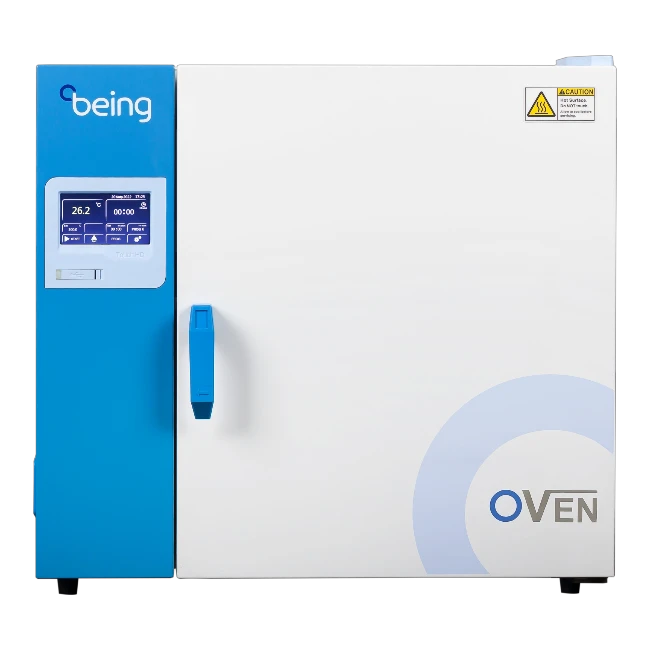
The BV-20 Programmable Vacuum Oven is the compact entry model of the BV Series — delivering superior vacuum depth at 99 Pa (better than the DZF Series' 133 Pa), touch screen programmable multi-stage control, standard inert gas inlet for oxygen-sensitive material drying under inert atmosphere, and comprehensive 6-layer safety with independent secondary temperature limiting protection. For pharmaceutical laboratories requiring better vacuum performance, programmable protocol automation, inert gas purging capability, and more comprehensive safety documentation than basic LED-display vacuum ovens provide — the BV-20 represents a qualitative step up from entry-level DZF Series models. With a 304 stainless steel 300 × 300 × 275 mm chamber, ±1°C accuracy, double-layer observation window, silicon sealing, 700W efficient power, and fault display screen — the BV-20 delivers professional programmable vacuum drying performance in a compact 24L bench-mountable format.
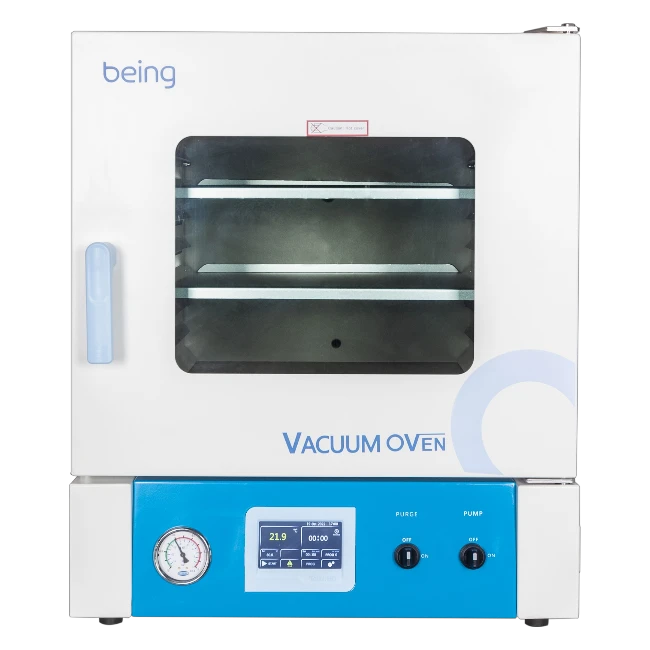
The BV-20 Programmable Vacuum Oven delivers compact 24L precision vacuum drying at 99 Pa with touch screen multi-parameter programmable control, standard inert gas inlet, 304 stainless steel chamber, double-layer observation window, silicon sealing, and 6-layer safety including secondary temperature limiting protection — providing superior vacuum performance, protocol automation, and safety documentation for pharmaceutical, chemical, and research laboratory heat-sensitive drying applications.
The BV-20's touch screen controller provides an intuitive interface for all vacuum oven parameters — temperature setpoint, multi-stage programme configuration, timer management, and operational status — from a single colour display. The touch interface eliminates the mechanical button and knob interfaces of LED-display vacuum ovens, enabling precise digital parameter entry without physical contact wear and providing cleaner, more hygienic operation in pharmaceutical laboratory environments. Real-time display of actual and setpoint temperature at 0.1°C resolution, programme stage status, and alarm indicators are continuously visible on the touch screen throughout vacuum drying operations.
The BV-20's programmable multi-stage control enables sequential temperature stages with independently specified setpoints and durations — automating complex pharmaceutical drying protocols, chemical processing thermal sequences, and research material conditioning procedures that require defined temperature transitions without manual intervention. Multi-stage programming directly supports the pharmaceutical LOD testing methods that specify defined temperature ramp and hold sequences, research protocols requiring progressive temperature steps, and industrial drying procedures with multiple sequential drying conditions for different moisture fractions.
The BV-20 achieves 99 Pa maximum vacuum — meaningfully better than the 133 Pa of the DZF Series. At 99 Pa, the boiling point of water decreases to approximately 45°C (vs approximately 51°C at 133 Pa) — enabling approximately 6°C lower effective drying temperature for equivalent moisture removal. This reduced-temperature advantage is particularly significant for highly thermosensitive pharmaceutical materials where every degree of temperature reduction translates to reduced risk of thermal degradation during the drying process.
The BV-20's 304 stainless steel 300 × 300 × 275 mm chamber provides corrosion resistance and easy cleaning across the compact 24L interior — compatible with the pharmaceutical, chemical, and research sample types processed in compact-scale programmable vacuum drying. The stainless steel construction withstands the repeated solvent vapour exposures, aggressive cleaning procedures, and thermal cycling of pharmaceutical quality control and research vacuum drying operations throughout the instrument's operational lifetime.
The BV-20's double-layer tempered glass observation window provides thermally insulated visual access to the full 300 × 300 mm chamber interior during vacuum drying operation — enabling monitoring of drying progress, sample appearance, and foaming behaviour without breaking the 99 Pa vacuum. The double-layer design prevents outer glass surface condensation from ambient humidity that would obscure viewing of the drying process at the reduced operating temperatures enabled by the BV-20's improved 99 Pa vacuum.
The BV-20's silicon gasket sealing system maintains reliable 99 Pa vacuum retention across the door perimeter — essential for the improved vacuum performance that distinguishes the BV Series from the DZF Series at equivalent chamber capacity. Silicon maintains elasticity and sealing contact across the full RT+10°C to 200°C operating range without the compression set degradation that limits the service life of alternative gasket materials at extended high-temperature operation.
The BV-20's standard inert gas inlet enables nitrogen or argon purging of the vacuum chamber — providing two critical capabilities not available in DZF Series models: oxygen-free sample retrieval after vacuum drying (replacing vacuum with inert gas before door opening to prevent atmospheric oxygen contact with oxidation-sensitive dried materials), and inert gas vacuum cycling (alternating vacuum evacuation and inert gas backfill) for thorough removal of residual solvent and oxygen from porous sample matrices. The inert gas inlet is standard — not an optional extra — in the BV Series, reflecting the pharmaceutical and advanced research orientation of the programmable vacuum oven platform.
The BV-20 incorporates six independent safety systems — secondary temperature limiting alarm, over-current/over-temperature/overload protection, audible and visual alarms, automatic heater cut-off during abnormal conditions, insulated cabinet and door for operator safety, and fault display screen — providing the most comprehensive safety architecture in the compact vacuum oven category.
The BV-20's secondary temperature limiting system operates as an independent hardware circuit completely separate from the primary touch screen controller — monitoring chamber temperature independently and activating automatic heater cut-off if the temperature exceeds the configured safety threshold. This dual-circuit independent protection is the critical safety feature for programmable vacuum oven operation where complex multi-stage automated protocols run unattended — providing hardware-level backup protection that remains active even if the primary touch screen controller develops a fault during a multi-stage drying programme.
Three independent electrical protection systems — over-current against wiring and component faults, over-temperature from the secondary hardware limiter, and overload against sustained abnormal electrical conditions — provide comprehensive layered electrical safety for the BV-20's 700W heating system during pharmaceutical and chemical laboratory vacuum drying operations.
Dual-mode alarms activate for all abnormal conditions — temperature deviations, secondary limiter activations, programme faults, and system anomalies — ensuring that safety-relevant events are communicated during unattended programmable protocol execution across the full working day and overnight vacuum drying operations.
Immediate automatic heating element power cutoff upon detection of any abnormal condition — removing the energy source driving the abnormal temperature as the fastest possible protective response. At compact 24L scale, faster automatic response limits the total temperature overshoot and sample exposure to abnormal conditions before the operator's corrective response.
The BV-20's insulated cabinet maintains low external surface temperatures during high-temperature 200°C operation — protecting pharmaceutical laboratory operators from contact burns during adjacent workstation activities and the instrument placement and removal operations required for routine laboratory vacuum drying workflows.
The BV-20's touch screen displays diagnostic fault information for all abnormal conditions — enabling operators to identify the specific cause of alarms and safety activations from the instrument display without requiring specialist service support. Faster fault identification reduces downtime during pharmaceutical QC and research laboratory time-critical vacuum drying workflows.
Explore alternative models and related solutions from other categories